Aural Sculptors - The Stranglers Live 1976 to the Present


Welcome to Aural Sculptors, a blog aimed at bringing the music of The Stranglers to as wide an audience as possible. Whilst all of the various members of the band that have passed through the ranks since 1974 are accomplished studio musicians, it is on stage where the band have for me had their biggest impact.

As a collector of their live recordings for many years I want to share some of the better quality material with other fans. By selecting the higher quality recordings I hope to present The Stranglers in the best possible light for the benefit of those less familiar with their material than the hardcore fan.

Needless to say, this site will steer well clear of any officially released material. As well as live gigs, I will post demos, radio interviews and anything else that I feel may be of interest.

In addition, occasionally I will post material by other bands, related or otherwise, that mean a lot to me.

Your comments and/or contributions are most welcome. Please email me at adrianandrews@myyahoo.com.


Showing posts with label The Bodysnatchers. Show all posts

Tuesday, 23 December 2025

2 Tone Top of the Pops


Here's something that I was looking to put together for a long time. The 2 Tone flame burned brightly and intensely... but only for a short time. But in those months across 1979 to 1981 it seemed that the world had turned monochrome, at least for a significant section of record buying teenagers.

This collection of appearances from the UK's long running chart related TV show, Top of the Pops, is not entirely complete. There were more than one appearance of some of the tracks e.g. 'Gangsters', some songs went beyond 1981.... The Beat's 'Can't Get Used To Losing You' and of course Special A.K.A.s 'Nelson Mandela'. Nevertheless, it is a good representation of the 2 Tone genre.

'We don't need no British Movement
Nor the Ku Klux Klan
Nor the National Front
It makes me an angry man'


Terry says 'Ho Ho Ho!'


Monday, 10 April 2023

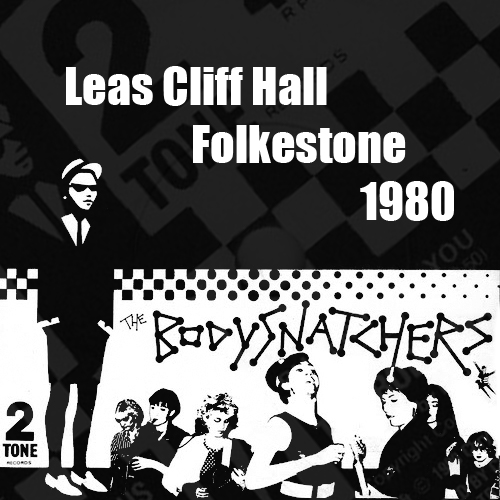
The Bodysnatchers Leas Cliff Hall Folkestone 30th August 1980


I think that it is a real shame that The Bodysnatchers did not get to the point of releasing an album. The material was certainly good enough, but it wasn't to be. Consequently, the fossil record for the band is very sparse indeed. Official releases amounted to two singles (both on 2 Tone), 'Let's Do Rocksteady'/'Ruder Than You' and 'Easy Life'/'Too Experienced' and the live recording of 'Easy Life' that appeared on the 'Dance Craze' soundtrack. With the film and soundtrack reissue the archive has been boosted by the addition of 'Let's Do Rocksteady' and '007 (Shanty Town)'. Unofficially, a trawl of the internet will throw up the two radio sessions that the band recorded for John Peel and this recording from Leas Cliff Hall in Folkestone from August 1980.

More recently, their former lead singer, Rhoda Dakar has rerecorded and toured Bodysnatchers' material. Interestingly, her new album, an album of covers includes one 'Hanging Around'... something to watch out for.


Saturday, 8 April 2023

Dance Craze - The Reception


Promo poster for the screening of the original film in New Zealand.

Record Mirror (7th February 1981)

THE PREMIERE of 'Dance Craze' , the Two - Tone movie, was an extra special event held on Saturday for several hundred under - 18s. Tickets were distributed via a Record Mirror competition and direct invitations to childrens' homes such as Dr Barnardo's. Our 14 year old correspondent Sean O'Donovan hot - footed it from Canvey Island to the Sundown in Charing Cross Road and sent us this report:

AT 4 PM the waiting crowd were at last let into the premiere of 'Dance Craze'. hailed as 'the best of British ska - live' and starring the Beat. Madness. The Bodysnatchers, Bad Manners, Selecter and the Specials. As the mass flocked in, the walls were stripped bare of all posters and LP covers. Down on the stage. Radio One's Richard Skinner was playing some of the aforementioned groups' hits, which got us up onto the dance floor for a moonstomp. At 4.20 the first of the groups' members entered - John Bradbury,  drummer of the Specials, came in rather unnoticed. Suggs. However  made a dramatic
entrance and was immediately mobbed by autograph hunters. I don't think anyone could not have noticed Madness because they were wearing black dress suits with red carnations and canes for the event.

Arriving later were Terry Hall, Rhoda of the Bodysnatchers, Ranking Roger and Dave Wakeling of the Beat, Charley ex of Selecter and many others. They gathered in the Liggers' bar above the main hall, talking to fans and signing the posters and LP covers previously decorating the walls.
The music played for an hour, with records, T-shirts. posters (which were ripped to bits) and badges being distributed to the madding crowd. Five o'clock and the film was underway. The fans were not exactly ecstatic - no one danced! – but clearly enjoyed it nevertheless.

As the crowd filed out, the announcement came over the speakers that more merchandise was being given out at the door. This caused havoc, but luckily order was maintained.

The one question being asked at the end of the event by all the girls was about Suggs and Bette Bright. Is she really going out with him? SEAN O'DONOVAN

THE OPENING of the Two - Tone movie is a spoof of the old 'Look At Life' short films that used to precede the main feature at Odeons up and down the country, and though many of its audience won't remember such things, it's a nice witty way to start.

The Specials' 'Nite Klub' is first up, followed by Madness with 'The Prince'. A new technique has been used for the live footage of which the film largely consists, and very effective it is too. The hot, jumpy atmosphere of the various gigs is splendidly captured throughout.

The Bodysnatchers' cover of old fave '007' comes next, and it's a heartening sight to see the girls - girls! hooray! - keeping well up with the male musical competition. Pauline Black of the Selecter looks exceeding well, too, and I hope she' ll forgive a totally non - sexist comment here: the camera seems
reluctant to move away from her bottom (clad in white ski - pants) and I don't blame it a bit.

During Madness's ska 'Swan Lake ' there's some really tasty footage of loafers and Dr Martens slow - motion dancingl, and amusing cuts to a ballet company performing to 'Swan Lake' in its onginal form. I only wish there'd been more of this sort of thing; it would have broken the relentness flow of live
performance to good effect.

Ah well, on with the bands . .. Bad Manners don't come off too well I'm afraid. particularly when following the Bodysnatchers; they look so big and white and male. The Beat quite simply steal the show, with Ranking Roger in particular walking off with my personal Oscars for best dancing, best hat, most charm and totally infectious enthusiasm.

Halfway through we break for a section of Pathe News, hilarious stuff showing dance crazes of yesteryear. This would have been better cut up and shown in bursts throughout the film methinks,  but it's a good idea .

More stand - out bits: Madness's 'Razor Blade Alley ' and ' Night Boat to Cairo' . the staged fight during Selecter's 'Too Much Pressure ', the bottle of Lucozade on Jerry Dammers' piano and the closer - ' Nite Klub' again – with Terry Hall deadpanning beautifully throughout the scathing lyrics.

See it, dance to it, sing along and cheer for your laves. It's that kind of movie and I loved (almost) every minute of it. SUNIE.


Record Mirror (7th February 1981)

DANCE CRAZE (Soundtrack)
(CHR TT 5004)
By Sunie

YOU'VE FLOCKED to the gigs, you've thrilled to the hits, you'll soon be queueing for the movie - now hear the soundtrack! Let's skank through the tracks on this live monument to the Two-Tone story so far, before sitting back for some armchair analysis ...

Side One opens with the Specials' 'Concrete Jungle', followed by the Beat's 'Mirror in the Bathroom', the
latter surprisingly sounding more sinister here than on the studio version. Anti-stoutism's firmest
advocates Bad Manners are next with 'Lip Up Fatty', which is hearty enough but suffers rather from
foliowing the much more subtle Beat sound.

Absolute stand-out on this side is 'Razor Blade Alley' by Madness, a superb slice of finger-snapping
sleaze closer to Tom Waits than to Prince Buster, which tells of losing virginity and health in one brief
encounter. On to 'Three Minute Hero' by the Selecter after that brief change of tempo; I never reckoned
this song much, but that's just my grouse. The Bodysnatchers' sole contribution to the LP is 'Easy Life',
wrapping the liberation v procreation dilemma in delicious girly harmonies and what I imagine to be a rock-• steady rhythm; it sounds different from pure ska, anyway. The Beat reappear with 'Big Shot' and
Madness end the side with an insanely fast and saxy 'One Step Beyond' .

Side Two kicks off with the seat's 'Ranking Full Stop', a lively if unexceptional number brought up to
scratch by Ranking Roger's sheer exuberance. Specials next with 'Man at C&A'; then the Selecter's
'Missing Words', smashing melodic pop deftly performed. Bad Manners' 'Inner London Violence' is more of their razzy stomp, but with considerably more musical ' substance than their previous effort.

'Night Boat to Cairo' is the song that made me fall for Madness, and here it is in all its glory: I don't know
which I love more, Lee Thompson's marvellous sax or Suggs's inimitable vocal. Then we're back to the
Selecter for 'Too Much Pressure' , and the set ends at the 'Nite Klub', with brass ensemble Dick & Rico well to the fore of a steamy Specials sound.

Each group uses its own producer, and since the list of those gentlemen's names reads like a studio
'Who's  Who’, you may rest assured that the quality throughout is triff.

It's positively mind-boggling to consider that each of these bands owes their first taste of success, at
least in part, to J Dammers Esquire's vision, and trying to count the sum total of their hits brings me and my abacus out in a cold sweat. It's been said many times before, but it is a truly joyful thing that such groups as these are actively breaking down barriers of race, age, gender and musical style. More
power  to them. + + + +

Smash Hits (19th February 1981)


New York Times (25th April 1982)

The sloppy but cheerful ''Dance Craze,'' which opened Friday at the Eighth Street Playhouse, is a concert film devoted to the musical hybrid known variously as ska, or two-tone, or rock steady. The English bands featured here owe a lot to reggae - the best-known British band rockers playing anything of this sort are the Police, who do not appear in ''Dance Craze'' - but have added a thing or two of their own. Flat tops. Checked jackets. Persistent hopping, preferably from one foot to the other. An overall spirit of jubilation.

''Dance Craze,'' which was directed by Joe Massot, shows so little concern for the ordinary cinematic niceties that it never even identifies the bands on screen, except in the opening credits. These groups are the Specials, the Bodysnatchers, Madness, Bad Manners, the English Beat and the Selecter.

The personnel is racially mixed -which is part of why the music is nicknamed ''two-tone'' - and a couple of the lead singers are women. One lead singer, from Bad Manners, is a fat man in T-shirt, droopy pants and suspenders, wearing army boots and a skinhead's hairdo. No one can accuse these bands of lacking either enthusiasm or character.

''Dance Craze'' isn't anything more than a chance to watch these groups for an hour and a half, and to hear a very muddy version of their sound; the lyrics are almost indistinguishable throughout. For anyone interested in this happy, energetic music, that may be more than enough. Janet Maslin

The Cast

DANCE CRAZE, directed by Joe Massot; visual concept and photography by Joe Dunton; edited by Ben Rayner; music produced by Clive Langer and Alan Winstanley; produced by Gav- rik Losey; released by Nu-Image. Running time: 86 minutes. This film has no rating. At the Eighth Street Playhouse, at the Avenue of the Americas.

Some were critical...

London Trax


Fuck Art Let's Dance! - 'Dance Craze' Gets The Deluxe Treatment (At Last!)


Music Week magazine announcement of the original 'Dance Craze' release
7th February 1981.

Rock ‘n’ Roll films can be lame affairs, a vehicle by which stars on a downward trajectory can salvage something from a flagging career or a means by which a record company can foister a few more quid from soundtrack sales on the back of a bit of celluloid exposure. However, very occasionally, a rock ‘n’ roll film can spark the imagination of its audience.
 
When Bill Haley & The Comets’ ‘Rock Around The Clock’ opened in British cinemas in 1956, the reaction took the public by surprise as young audiences let rip. Seats were slashed and members of the audience danced in the isles, their reverie only halted by the arrival of the police. Such behaviours were very unbecoming in austere, 1950’s Britain. When similar scenes occurred some 25 years  later upon the release of the film ‘Dance Craze’, the element of shock had gone. Teenagers and their associated youth cults/movements (call them what you will) were well established, if not well received by the wider public. As suggested by the name of the film, audiences were again in the isles dancing to the band’s performing on the big screen. Was there fighting? I don’t know, probably if some of the 2 Tone gigs were anything to go by. Did seats get slashed? Most certainly.

 
By the time Joe Massot's film was released in the UK in February 1981, 2 Tone’s flame was already sputtering. The Specials’ camp was not a happy one and within six months they would be no more. The Selecter  released their second album in the same week as ‘Dance Craze’. However, the single that shared the same name of the album, ‘Celebrate the Bullet’ was subject to radio play bans, by virtue of the fact that John Lennon had been shot dead only weeks before. Such censure hastened the demise of the band. All girl 2 Toners, The Bodysnatchers called it a day that year without releasing an album. The Beat continued on their own ‘Go Feet’ label into 1983 before splintering. Madness went on to win the hearts and minds of chart aware kids with a string of classic singles that paid scant regard to the original 2 Tone sound. And Bad Manners? Well they were Bad Manners.
 
It was Massot’s intention to make a music film about Madness, a band his son had seen on their first US tour. However, realising that the bands originally signed up by Jerry Dammers onto the 2 Tone label formed a cohesive scene that encompassed both music and fashion, the scope of the film project was revisited. At the time that the footage was shot in 1980, all six bands that featured in the film were alive and well and in your town. The film is intense, the stage is crowded (the bands sum of members was 43 musicians!) and the dance floors heroically bore the weight of thousands of bouncing souls and soles. The Top Ranks, Locanos and Meccas of Britain throbbed with energy when the 2 Tone bands rolled into town. The exuberance of the stage performances transmitted effortlessly into the receptive audiences as the boundaries between musician and music fan blurred. At no point was the absence of a feeling of ‘them and us’ more apparent than during the stage invasion that became a regular feature at the end of a Specials set. Occasional glimpses of a microphone or guitar headstock would be the only indication of the fact that in the middle of the throng a band were playing!

 
‘Dance Craze’ was a tonic for troubled times. British industry creaked under the malign influence of a new economic experiment. The ‘troubles’ in Northern Ireland were at a ferocious peak and women in Yorkshire walked the streets in fear as a serial killer did was serial killers do. Black youth rose up in the inner cities as policing methods caused resentment to boil over and the National Front smashed up gigs in their efforts to find a scapegoat for their woes. This was the nature of the soil in which the 2 Tone seed germinated in 1978-’79.
 
2 Tone is remembered as a movement/scene with an anti-racism message at its heart, which of course it was. However, the bands were not given over to preaching, only a small number of the bands’ songs addressed the subject of racism. There really was no need to preach, just the fact that each of the bands (with the exception of Madness) featured both black and white musicians in their line ups. That had not really happened before, at least not to the same extent. Rather than focusing on a political agenda, the 2 Tone material dealt with the everyday trials and tribulations of growing up in Britain’s cities in the late ‘70’s and early ‘80’s.

 
‘Dance Craze’ captures the 2 Tone bands in their prime. Both the film and the associated soundtrack brilliantly convey the energy and passion of these bands and through that the politics finds a voice. These live recordings are in my opinion a far better reflection of what 2 Tone was all about that the studio albums (brilliant though they are). So, that leads me to ask, why has the film been ignored for 43 years! For some reason, the film did not get an official release until 1989 on VHS video. Since that time all of the band’s albums (sorry Bodysnatchers) have received the deluxe reissue treatment, so as an official release on the 2 Tone label, why was ‘Dance Craze’ overlooked. I do not have the answer to that but I can say that the issue has been addressed with a stunning release (expanded CDs, triple vinyl, T shirts and tote bags, not forgetting of course the DVD/BluRay edit of the film itself).
 
The man entrusted to turn Joe Massot’s film concept into reality was film maker Joe Dunton. Massot and Dunton has first worked together in the late sixties and both men trusted each other’s abilities. Dunton was interviewed in the 100th issue of ‘Vive Le Rock’ magazine and from that it became apparent to me for the first time just how much technical care and attention had been lavished on this cinematic project. I am no techie, but understood the fact that the decision was taken to shoot the film on 35 mm film as this can be blown up nicely to 70 mm for the big screen. It was always intended that ‘Dance Craze’ was a production to be viewed on the big screen. In fact there was no other option at that time, since at the time of its release (February 1981) home video was still in its infancy and only available at a cost that was well beyond the means of the largest proportion of its intended young audience. The other innovation was the use of the ‘Steadicam’ camera, very useful when cameramen and their subjects are in constant and frenetic movement on overcrowded stages! The film is shot both from the audience and the stage which further serves to break down barriers. The overall effect is that of a joyous communion….

 
‘Buster, he sold the heat with a rock-steady beat’….

To mark the release of the restored film, screenings and Q&A's were hosted across the country. I am still kicking myself that I missed the London screening. It was a gathering of 2 Tone royalty make no mistake!

Rhoda (The Bodysnatchers), Pauline (The Selecter), Jerry (The Specials), Buster (Bad Manners), Neville (The Specials), Sugary, Woody, Lee (Madness).
BFI IMAX, London.

Promo for the rerelease (2023).
 
What will follow are first a couple of contemporary reviews of the film/soundtrack and then six posts, one for each of the ‘Dance Craze’ bands performing at around (give or take a few months) the time when the film was recorded or released.

Sunday, 25 September 2022

The Bodysnatchers John Peel Session 8th April 1980


Happy days, having delved into the controversial history of Rhoda and The Special AKA's version of 'The Boiler'single, I unearthed a gem. As mentioned in the earlier post, this Bodysnatcher's original is a rather elusive beast, appearing on one bootleg and on a John Peel Session from 1980. And here is that session. The Peel session id posted here in great quality (thanks to the 'Formerly known as the bollocks' website). At this stage of its gestation (perhaps an unwise turn of phrase given the subject matter) 'The Boiler' has all of the signatures of early 2-Tone i.e. that high octane melding of punk and ska. To my ears the song sounds great and Rhoda's vocals are pretty much word for word the same as on the released version. What it lacks is the sinister edge that Jerry's cinematic organ arrangement brought with it. But it is great to be able to compare and contrast such a hugely poignant and important song as it evolved between the writing and recording.

FLAC: https://we.tl/t-4okMul9MpP

Sleeve: https://we.tl/t-qxLha4HYiy


The Boiler by Rhoda Dakar and The Special AKA - A 2 Tone Masterpiece


Once again out living area is shared with a mass of vinyl with no means of making itself heard! I knew what I had to do.... simple really, invest once again in a turntable and reignite that old passion for vinyl. Reissues do not tempt me but some of the new old material that sees the light of day does peak my interest. This was the case for a 2021 Record Store Day release of two Jerry Dammers home demos, 'Ghost Town' and 'Theme From The Boiler'. 

This got me thinking about the final early 1982 release of 'The Boiler' (which was backed by the 'Theme From The Boiler', the instrumental version). In many ways much has happened in terms of sexual attitudes in the intervening 40 years. Were it ever to be shown again we might laugh at the arse-slapping antics of the Benny Hill show but not in the way we perhaps used to, rather in a 'how on earth was that allowed to be broadcast. In a similar vein, I recall a few years back showing our son Rudi a compilation of old '70's ads as a means of demonstrating how far we have come in equality terms. In one memorable ad, a secretary looked on glumly as her male boss went about his business paying no heed to her. The following day after discovering a brand of breath freshener the boss was overcome with a passionate desire for his transformed secretary to the extent that he picked her up in a fire-man's carry and whisked her out of the room to what ends? Who knows a spot of dictation perhaps?

At the extreme of sexual violence there is then as now rape and not surprisingly not many artists of the day were brave enough to tackle such a taboo subject. Step forward Jerry Dammers and Rhoda Dakar. Rhoda was vocalist with Specials 2-Tone label mates The Bodysnatchers. The London based all female outfit were short lived, and whilst some of the musicians went on to form the Belle Stars, Rhoda kind of became an honorary Special, recording with them on the 'More Specials' album and performing with the band live throughout 1981.

I did not realise until I started to delve deeper in to the evolution of this remarkable song that it was originally a Bodysnatchers' song. It could have been their first single but Chrysalis and the band went with 'Let's Do Rock Steady', a song with at least more commercial potential than 'The Boiler'. With the early demise of the Bodysnatchers, the song effectively left the stage with them and things may have stayed that way without the involvement of Jerry Dammers, fresh out of the rubble of The Specials break up. It was under these circumstances that this little known 2-Tone original was given a second lease of life.

With the release of 'More Specials' the band dramatically veered away from the ska/Blue Beat sound that underpinned the original 2-Tone sound. Different musical styles and elements, dare I say it, of 'easy listening' came into play, brought to the fore principally by Jerry's end of the pier organ flourishes. For the reworking of 'The Boiler' the keyboard track was re-written as what could have been a score for a 1960's film-noir. The keys perfectly follow the narrative of an evening that started with high hopes but ended in an horrible act of violence. The upbeat, although rather sinister music, driven by the organ, descends as the song progresses into a cacophony of intense sound as the narrator succumbs to a brutal rape.

The single was released in January 1982 and became embroiled in the type of censorship row not witnessed since the Sex Pistols 'outraged' a Jubilee-happy population back in 1977. 

I will pause here and let contemporary interviews with Rhoda and the music press take up the story. But before I do here's what the fuss was all about. In a rare (the only I think) appearance of the song on TV thanks to the 'Oxford Road Show' Rhoda performs 'The Boiler'

'The Boiler'
Rhoda Dakar and The Special AKA
Oxford Road Show 1982

New Musical Express 23rd January 1982

The reality of rape that they’re trying to ban.

Adrian Thrills talks to Rhoda Dakar about her uncannily timed single ‘The Boiler’.

During a week in which a Crown Court judge decided that the teenage victim of convicted rapist John Allen was “guilty of a great deal of contributory negligence” in hitch-hiking alone at night, a record that stands as a harrowing tirade against violence to women has effectively been banned from the airwaves of Britain.

The record id Rhoda Dakar’s terror-stricken monologue ‘The Boiler’ on 2-Tone. Produced by Jerry Dammers and played by the Special AKA, the remnants of the post-split Specials, Rhoda’s vivid account of a rape is currently being ignored by radio programme controllers.

Radio One last week slipped the disc into their two late evening slots – John Peel and Richard Skinner – but have now dropped from all of their playlists, while one play from DJ Peter Young on London’s Capital Radio last Saturday led to listeners jamming the switchboard and a somewhat sensationalist story in the Sunday People.

A Radio One spokesman denied on Tuesday that the record had been banned, though the BBC have not played it since last weekend.

“It was played twice last week on Peel and Skinner and discussed on Saturday’s Rock On show as a review record. It hasn’t been banned, but it is unlikely that it will get future plays unless it comes up in some other context, another review or discussion show.”

But Chrysalis Records, 2-Tone distributors, maintain that this constitutes a ban – a claim refuted by the BBC.

“It isn’t a case of the BBC ignoring the record,” continues the Radio One man. “It has been played as a review record. But the general feeling is that it is unsuitable for normal radio play. The final decision is still up to the producer of each individual show, but it is unlikely that they will decide to play it.

The song itself is not a new one, dating back to Rhoda’s days as the lead singer in the all-femail 2-Tone septet The Bodysnatchers, most of whom evolved into the Belle Stars at the start of last year. It was originally intended as a Bodysnatchers’ single or album track, a plan which failed to materialize when the band split after only two singles, although it was documented in a John Peel session in 1980.

Rhoda herself is realistically pessimistic as to the single’s commercial potential. She’s grateful to finally have the chance to release it.

“I don’t really expect it to be a hit, but I hope that people will get to hear it. I never expected it to get any airplay, so any play that it does get is going to be a bonus really. It wasn’t released to be a massive hit. It was done ‘cos it’s a good song worth recording.”

Was it written deliberately to shock?

“I didn’t think of it that way when I was writing it. It just came from a jam we were doing during rehearsals. I started ad-libbing and it just came out, but its not from any personal experience thank goodness. Then again, I think that it did come as a shock to a lot of the people who went along to the early Bodysnatcher gigs.”

The single’s release could hardly have been more uncannily timed, coming the week before Judge Bertrand Richard’s ludicrous courtroom leniency and the subsequent outcry.

“It just leaves you speechless when you hear things like that,” says Rhoda, “but seems to sum up the reaction of a lot of people to the crime of rapists. It certainly isn’t treated with the seriousness it should be, not in this country anyway. In America, for example, it is taken a lot more seriously, maybe because it’s more of a problem out there.

“In Britain, rape is something you don’t talk about, even if it happens to you. The attitude of a lot of people is that girls on their own are just asking for it by the way they dress or the fact that they are walking around late at night… we are almost conditioned to think that if a girl gets raped, then it’s her own fault, which is ridiculous.”

“A woman walking around late at night is somehow regarded as inviting some sort of approach. They just assume that you’re looking for a bloke. It’s the same stupid attitude.”

Jerry Dammers’ ingenious treatment of the song and the eerie keyboard motif that hovers ominously in the background as the record builds to a chilling crescendo have totally transformed it from the version that used to highlight Bodysnatchers’ sets, and Rhoda is quick to acknowledge the talents of theman they call The General.

“It is totally different from the way we used to do it in The Bodysnatchers. I don’t profess to know much about music itself, so I listened to a lot of the advice Jerry gave me. The arrangement is now totally different – Jerry seemed to be thinking of something along the lines of a really spooky Hitchcock movie soundtrack.”

Rhoda has been playing live with The Specials immediately before the summer split and appeared on those two superb Top Of The Pops versions of ‘Ghost Town’ when the single was number one. But she maintains that she was very much the outsider when it came to the end of the band.

“I wasn’t really in on that very much. I was basically just a holidaymaker, doing a few gigs with a band that I really liked. I never really tried to be part of the band, ‘cos I knew that I wasn’t.

“In a way, from being involved with them, I could see that the split was coming – but when it arrived, it still came as a surprise. Not so much because the gravy train had come to a halt…. Just because it was the end of a brilliant band.”

Rhoda’s future involvement with The Special AKA is not yet certain, as the nebulous unit of Dammers, drummer Brad, bassman Horace and guitarist, John Shipley, once a Swinging Cat, are still in the process of finding their feet. What seems most probable is that The Special AKA will function as a production company, rather than a fixed band, with various vocalists and instrumentalists guesting regularly on an array of projects – a single with Rico has already been recorded and a follow-up to ‘The Boiler’ entitled ‘Female Chauvanist Pig’ has been written and a demo made.

“I don’t know whether there is going to be any sort of permanent set up. I see Brad and Jerry from time to time, but there hasn’t been any talk of a fixed group. There is some studio time booked soon, so I suppose whoever turns up is going to be part of The Special AKA!

“To be honest, I couldn’t really tell you what’s going to happen ‘cos I don’t really know…”

Record Mirror made 'The Boiler' one of their singles of the week in its week of release. They also made reference to the scandalous Crown Court judgement in the John Allen case.

Record Mirror 16th January 1982


The storm broke quickly with stories of retail bands appearing on page 3 of the following weeks edition which also featured an interview with Rhoda.

Record Mirror 23rd January 1982


2-Tone's follow up to'Ghost Town' is equally timely and a good deal more controversial. The Single is ‘The Boiler' and its subject is rape. As a result, it's been banned by the BBC. MARK COOPER meets up with RHODA, ex -Bodysnatcher, and listens to her side of the story.

'Come outside, there's a lovely moon out there .. .' (Mike Sarne)

The first sound is the bass drum. At first it's just a beat and then it begins to growl and grow louder - as if in pursuit. The 'steady beat' of the dance song turns into a nightmare while the circus organ  turns eerie and the cornet whistles down the wind.

Lulled by the conventional voice of the London 'dolly bird' you think you ' are safe until you realise you're in it, pop turns to shock and this is no longer seduction but rape, not sex but violence. This is Rhoda's 'The Boiler', the scariest Single since 'Watching The Detectives' and a good deal more topical to boot. 

Rhoda Dakar used to Sing with The Bodysnatchers, 2-Tone's all-women group. Although that group had something of a frivolous reputation, Rhoda's own interests were never escapist:

"That band contained all kinds of different viewpoints from outright feminist way on in."

'The Boiler' was the first original song that The Bodysnatchers ever performed: " I wrote the words in the tube going to Camden Town for rehearsal. The group could never agree to put it out as a single. Some of them felt it was too hardline and wouldn't help us commercially."

Eventually, these differing attitudes in The Bodysnatchers' caused them to split. Rhoda continued to perform the song with the Specials: "One of the reasons I believe this song will survive is that it's been performed over two hundred times. It's been written about and it's got a reputation. It always shocked people. Sometimes they'd just be quiet or sometimes they'd laugh, kind of hysterically."

"Jerry (Dammers) has always wanted to record the song. He wanted it to be The Bodysnatchers' first single. Now he's changed the music. The Bodysnatchers' already had music which they put the words to while Jerry wrote this music specially.

"We just kept the piano riff which was stolen from somewhere anyway. Jerry's music sounds like a soundtrack from a film." Rhoda will perform the song again, if and when The Special AKA play live.

Rhoda's rap has suffered for its topicality and for being explicit. Like Dury's 'Spasticus Autisticus', an inspired dance tune for the disabled (with all ironies intended), 'The Boiler' is being stifled. Meanwhile Bucks Fizz are Number One and their make-believe view of the sexes is played day in and day out until you too might believe that life is all smiles and knowing winks. Now listen to 'Make Believe' and 'The Boiler' and you tell me which is obscene' and which is healthier and then tell me why 'The Boiler' is being silenced.

The BBC's new method of killing a single is more effective than the outright ban. They probably got a few tips from the Polish government. Rhoda explains it to me in a record company office, her voice quiet but calm and only occasionally revealing the London twang that is 'The Boiler's’ everyday voice.

"The BBC don't make outright bans anymore because the last time they did that, it was 'God Save The Queen' which went to Number One. They will play it in connection with 'relevant discussion' on the grounds that if you're discussing something that people consider offensive to begin with, they needn't listen. They believe that if the record just comes up in normal air time it'll surprise and offend.

"Thankfully, Chrysalis haven't withdrawn the record - unlike Polydor with 'Spasticus' with which the record company were in collusion with the BBC. Polydor withdrew the single and, naturally, it sank without trace. Apart from the Pistols, all the records that have been banned have disappeared. After the Pistols, they no longer give the record the notoriety of banning it. They just don't play it.'

And so the voice of sanity and the voice of women is silenced. Instead we are offered a diet of make believe or the pornographic fantasies of heavy metal; clever lads like Phil Lynott describing himself as a 'Killer On The Loose', while the Ripper is murdering women. Women who supposedly want it. Who is obscene, the rapist or the victim? You tell me.

Rhoda doesn't condemn the male pin-up mentality or the male sex, though well she might: "All men aren't pro-rape. A lot of men find it just as horrific as I do. Just because you're into Page Three doesn't mean you’re pro-rape. That's quite a jump. There are plenty of men who're quite happy to look at pictures of women's tits who wouldn't go out and rape somebody."

But Rhoda is quick to point out that rape is not sexy or sexual, although it is an act of force directed against a person's sex. A woman's sex.

"Rape as I understand it is an act of force and violence, not a sexual act. A man tries to impose his will on a woman by force. If it's a sexual act, why do old women get raped? Rape is a way of asserting superiority.

"It’s more the attitude of the policeman, the husband, the boyfriend, that is supported by the Page Three way of looking at women, an attitude that blames the victim, that says that if you go round looking like that: 'What do you expect?'" 

"The woman in 'The Boiler' calls herself a boiler, she believes herself to be a boiler. And the consequence in the song, indirect no doubt, is that she's raped. Is this another way of blaming the victim? Ask Rhoda.

"Women are often their own worst enemies. Perhaps it's a divide and rule policy by this mythical male (whoever he is) who rules the world. You begin to accept the ideas that are forced upon you." The woman in the song is always a boiler in her own eyes and always helpless. Are women that helpless?

"When it comes to rape, a man is always going to be stronger than me which annoys me no end. Unless I can run a two-minute mile, if a bloke's got hold of me, there really isn't that much that I can do. If you get frozen with fear, you’re trapped and once a bloke has hit you a couple of times, what can you do, you can't get up. It's not like the TV fights that go on for half an hour."

'The Boiler' takes place not on the TV but in the realm of the kitchen-sink, where the dance hall has turned to the alleyway, the mascara has run, and the smell of the perfume has turned to the smell of piss. Here we are, back in the ghost town.

Rhoda and the boiler are obviously not one and the same. Rhoda played in the all-woman 2-Tone band, The Bodysnatchers. Although it was at a rehearsal that she heard the word ‘boiler’ (from a roadie), she says that that band escaped many of the worst consequences of being women in the male world of rock: "Most of the bands we played with were 2-Tone bands and they were all 'cool' . Once we started playing with normal groups we started to encounter the strange attitudes like: 'Do they really need a soundcheck, they 're only girls, etc'."

Where did the character of the boiler come from then? "I suppose the character is how I see a 'typical ' girl. She's may be how I could have been. A lot of women seem to see themselves in terms of the blokes they know and are or aren't going out with. You're only as important as your bloke. Most of the women I went to school with are married, only about three of them aren't.' And I went to a so called 'good' school, a grammar school."

Rhoda isn't blaming women or men but rather an attitude, a male attitude with which women often collude. " 'The Boiler' isn't addressed to a particular sex (not as if there's about five of them anyway) but to people. It was written and recorded for its own sake and written about an attitude, to women and to rape, an attitude that comes as much from women as it does from men, unfortunately. 

"You'll find women who have high executive positions and yet not tell her boyfriends' mates that she works. She doesn't like them to know that she's more successful than he (I don 't suppose he's too keen either).

"At work such women have authority yet all too often they'll leave the men to make all the decisions at home. Feminism has got us the jobs, but it hasn't changed our homes and private lives enough yet."

The next song she’s working on is called 'Female Chauvinist Pig'. She'll explain it: "Female chauvinism supports male chauvinism. A lot of women like to manipulate men, twist them round their little fingers as the saying goes while at the other extreme you have the Sun's idea of a feminist, the woman with a crop and, dungarees who claims that men are a mutation of women and are separatists. The song attacks both extremes. I’m more anti-sexist than definitely feminist.

"I don't know who this superwoman I believe in is but she's not this manipulative woman nor this separatist woman. I wouldn’t presume to say separatism is wrong or anything. It's just not for me."

Rhoda's voice is a sane voice, a calm voice that's not afraid of uncertainty and yet has reached some definite conclusions. Why is it that 'The Boiler' is unheard when pop-pap porno like Bucks Fizz fills the airwaves?

"This conspiracy is all around us everywhere. We're supposedly to think like Bucks Fizz. So much so that it's 'The Boiler' that uncovers the secrets of the underside of pap and lays them bare. If they don't want you to hear it, are you going to obey? Better scream than simper.

________________________________________

I'll leave the last word if I may to Nicky Summers, bass player of The Bodysnatchers and musician on the reworked version of 'The Boiler'. Here she discusses the song on her blog back in December 2017:


"Bodysnatchers songs came about with the music first . We would generally collaborate and  jam on pieces of music or someone would have a few chords, bass line , or keyboard line . Rhoda would then be inspired by our musical output and put the  lyrics to it. She would listen to us play in rehearsals and write while we played.

The Boiler - we used to jam around a 1960's sounding keyboard riff and gradually this piece of music grew . I remember coming out of Gaz Mayall's club , Gaz’ Rockin’  Blues,  one night and asking Rhoda to put lyrics to it. She came along to the next rehearsal and improvised over the music an experience of a rape.

The song title was called this because the manager of the Nips , a guy called Howard used to refer to women as ‘Boilers’  ..I think we were being ironic when we called the song that .

The audience reaction …generally stunned silence ..they didn’t used to even clap hardly after we played it , but they were always definitely transfixed by the song .

Jerry Dammers did a different treatment of the song and I re-wrote the bass line when we recorded it with Rhoda and the Special AKA .

I like both versions of the song , The Bodysnatchers version was more of a 60’s r and b thrash. It was powerful to play live , it is a challenging song for any audience , I think more powerful live than Dammer’s version which is manicured with production . 

The song itself had to be written, played and recorded  . I am glad and proud to have been part of it ."


Monday, 15 April 2019

2 Tone at 40!


A couple of months ago I had the aim of posting a clutch of 2 Tone material on the site. Well, as often is the case, other priorities cropped up and it didn't happen. So this is attempt number two and a 2 Tone themed week.

The Specials played at the Moonlight Club, a small pub venue in North London's West Hampsted, on 2nd May 1979. They were on stage just ten or so hours before the polls opened nationally in a General Election that would change the face of Britain for ever. Opening the set, the ever deadpan lead singer, Terry Hall, said 'I haven't got much to say, it's the eve of the election and it's 'Up to You'. By the end of the following day Margaret Thatcher's Conservative Party swept into power with a new brand of politics that would polarise the country over the new decade.

For me, 1979 marks the pinnacle of British popular music.... even the shite was good in someways! But it wasn't always easy to like the music you liked, left leaning bands attracted elements of the far right hell bent on violence and disruption. Multiculturalism brought to these shores throughout the '50's and '60's by the Windrush generation followed by an influx of Bangladeshi migration in the '70's, was not welcomed by all. The National Front had a popularity in the late '70's that has never been bettered by any far right group since. The British Movement, like The Specials, also headquartered in Coventry, were also on the scene. Both of these organisations knew that the life blood of their groups were young people. Both the NF and BM sought to recruit disaffected white, working class youth into its ranks. In order to do this they targeted those places where such individuals could be regularly found, on the football terraces and in gig venues. A good radio documentary 'Too Much Fighting on the Dance Floor', which describes the problems in music at the time, can be found here.

The music of 2 Tone melded the rhythmic tempo of Bluebeat ska with the urgency of punk to create something unique. I remember that in the class room, colour was abandoned as half the class adopted monochrome. The familiar images of Walt Jabsco and the Madness pork-pied 'M' were seemingly ubiquitous on school bags and exercise books! However, for those a bit older, who were of an age where they could see their 'Three minutes heroes' live, there was a danger in the gigs. Whilst the 2 Tone sound had an obvious appeal for reggae loving skinheads it also attracted right wing skinheads for whom the sight of black and white musicians sharing the same stage was an affront that invariably lead to violence. Many of the songs from the 2 Tone songbook addressed this situation head on, 'It Doesn't Make It Alright', 'Concrete Jungle' and 'Why?' by The Specials and 'Two Swords' by The Beat being good examples. The two aforementioned bands were the most overtly political bands having a 2 Tone affiliation, whilst some of the other bands were less upfront with the political message. Nevertheless, all of those bands were making a political statement simply by existing and spreading a message into the bedrooms of teenagers from Inverness to Ilford that peace, love and unity was not a pipe dream.


The 2 Tone flame burned with the intensity of magnesium ribbon, but like magnesium the brightness was short lived. The personalty differences within The Specials lead to an acrimony that on the one hand produced such brilliant music but meant that on the other hand their existence was also likely to be short lived. They split in the summer of 1981 but not before their crowning glory, 'Ghost Town'. Whilst it's iconic video was filmed in the deserted streets of a dawn morning in London, the song was a metaphor for all of those UK cities that were starting to feel the iron bite of that new politics, now known to all by the name of 'Thatcherism'. Unemployment rose as centuries old industries locked the factory gates for the last time. At the same time, race relations were at an all time low and in a scenario that could have come from the pen of JG Ballard, in the week that the bands last single reached No. 1 (June 1981) the inner cities of London, Bristol and Liverpool exploded as the country witnessed the worst riots for many decades.

So The Specials were no more, Lynval, Neville and Terry went off to form The Fun Boy 3, The Selecter soldiered on for some time in the face of diminishing record sales before throwing in the towel. The Beat fragmented sometime afterwards into General Public and The Fine Young Cannibals
(who enjoyed considerable commercial success) and the Bodysnatchers with some personnel changes emerged as The Belle Stars. As record company executives foisted on the record buying public a sanitised, apolitical and frankly lightweight musical diet that fitted the new mood in Britain, only Madness (always something of a 2 Tone outsider) seemed to weather the storm with their greater pop sensibilities augmented by those Nutty Boy videos..... but even they succumbed by the middle of the '80s.

There was one more notable coup that the General, Jerry Damners masterminded when he wrote 'Free Nelson Mandela' in 1984. Mandela was still imprisoned in South Africa and this was an effort to return the spotlight on his plight. Whilst not a huge hit (reaching number 9 in the UK charts) the impact of the song was very far reaching indeed. The song and Jerry were pivotal to the organisation of a huge benefit gig to mark Mandela's 70th birthday in 1988. The campaign for his release gained an unstoppable momentum that resulted in his eventual release two years later. As one of the last releases on 2 Tone Records the recording reunited many of the leading lights of the 2 Tone movement such as Elvis Costello (producer of the first album as well as a short lived artist on the labels roster), Rhoda Dakar, Brad, Lynval, Dick Cuthell, Dave Wakeling and Ranking Roger all appeared.


In time, even those bands that had spun off from the '79 originals petered out leaving the avid fan with nothing other than the records and the memories. That was the situation until the early '90's when some f those original musicians put together something of a 2 Tone co-operative that went by the name of Special Beat. Comprising, yes you guessed it, ex-members of The Specials and The Beat, their shows were some of the best that I have ever been to in nearly 40 years of gig-going. The energy, the heat and the sweat in those small venues was something to behold. But even more extraordinary was the reaction of the audiences, in raptures at hearing those songs again! Extensive touring by Special Beat demonstrated quite clearly that there was still a huge appetite for those 2 Tone classics.

Periodically, throughout the '90's and the first years of the 2000's various members of The Specials re-ventured into the studio and released new material, but with the exception of 'Guilty 'Til Proved Innocent!' the recordings were lackluster and failed to propel the band back into the public's view.

It was not until 2008 that fans began to think the unthinkable. In the summer of 2008. Terry Hall and Lynval Golding shared the 100 Club stage in London under the moniker of Terry Hall & Friends. Perhaps more importantly, Terry appeared to be comfortable once more with his early back-catalogue as the band played four Specials songs on the night. The road to reconciliation led to the 2009 Isle of Wight Festival which saw six sevenths of the original band performing together for the first time since 1981. Whilst it was disappointing that the main architect, in the form of Jerry Dammers, was not with them, for fans such as myself who were too young to see them live first time around, this was good enough.

The band's first dates on the tour that followed are the best gigs that I have ever witnessed (even over the best performances of The Stranglers - and there have been many).

The Specials at Brixton Academy 2009.

Live success in the UK lead to tours further afield, notably the US and Australia. But with the pressures of touring upon them once more, the rankles and personality clashes that existed within the band seemingly resurfaced and trouble ensued. Whilst The Specials have continued to tour, the current line up has only Terry, Lynval and Horace as the original members. Nevertheless, upon the release last year of a new album, 'Encore' they clocked up their first No. 1 album! Fair play to them!

The Specials 2019.

If you care to download the gigs that will follow during the week, you will understand the power of the music and message of 2 Tone which together if the reason why we are this year celebrating the Ruby anniversary of the label and the bands behind the label.

'Enjoy yourself, it's later than you think'.